Parasite frame analysis - Caitlyn
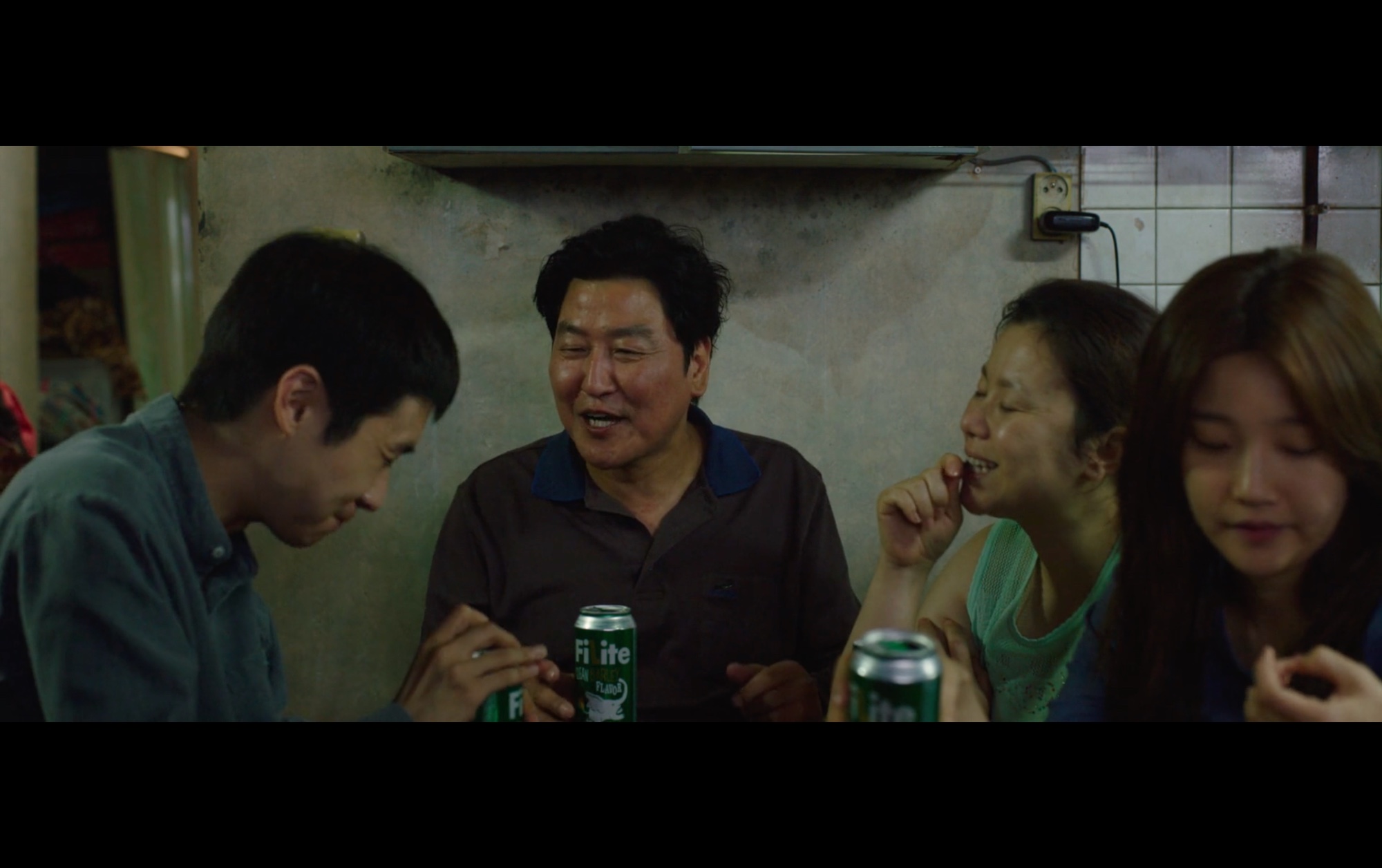
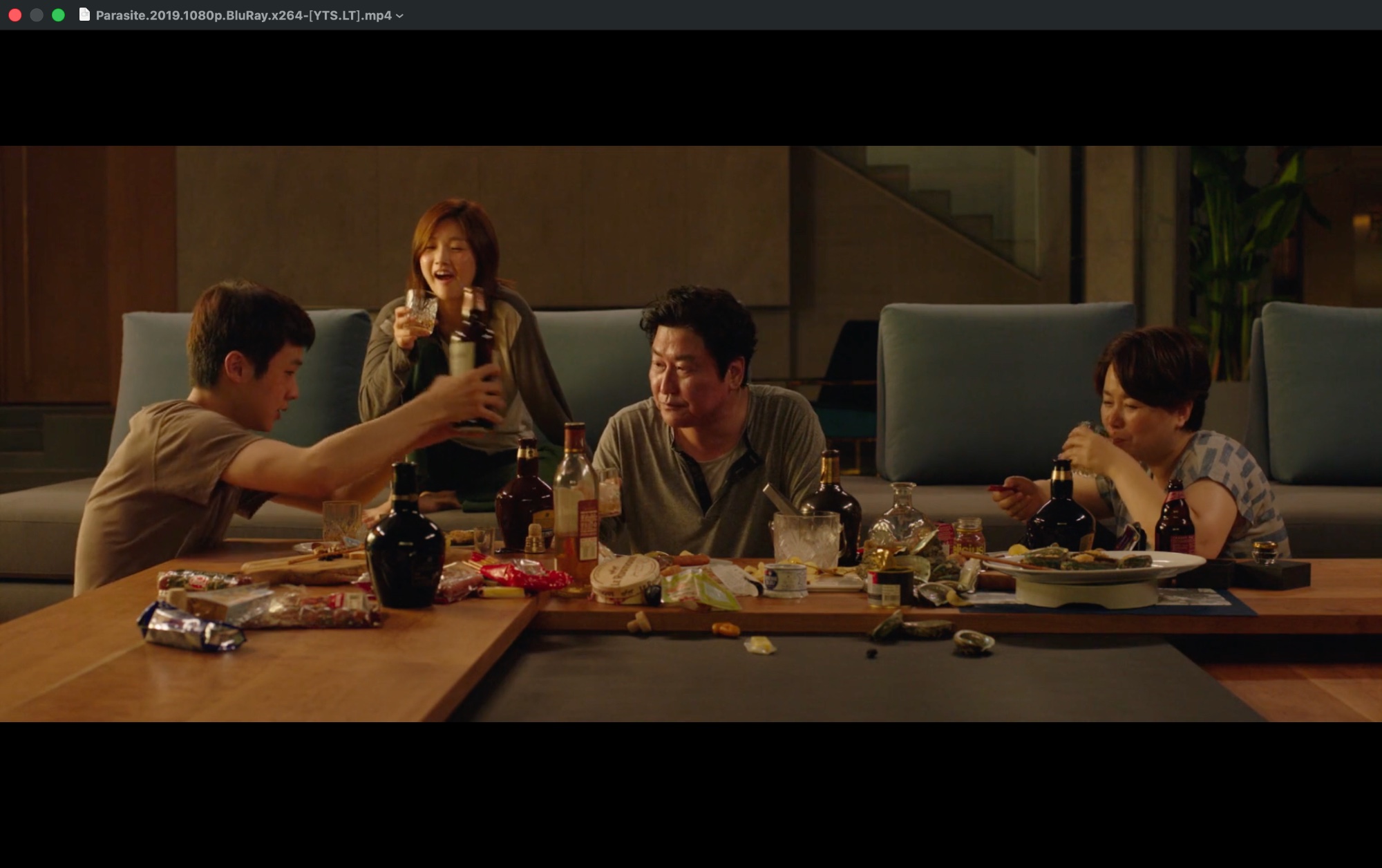
Techniques: The frame on the left creates a crowed composition, the family barely fit within the frame, with a little breathing space; whereas the frame on the right shows a much free composition.
Effects: This comparison gives the audience an illusion that the Kims, through working at Parks house, are becoming better and better, or richer and richer. Therefore, it feels more dramatic when things started to go down the hill and be the opposite as the audience expected after this temporary peace.
The family members of Kims are closer than the Parks who’s more isolated. This is implied by the composition as well.
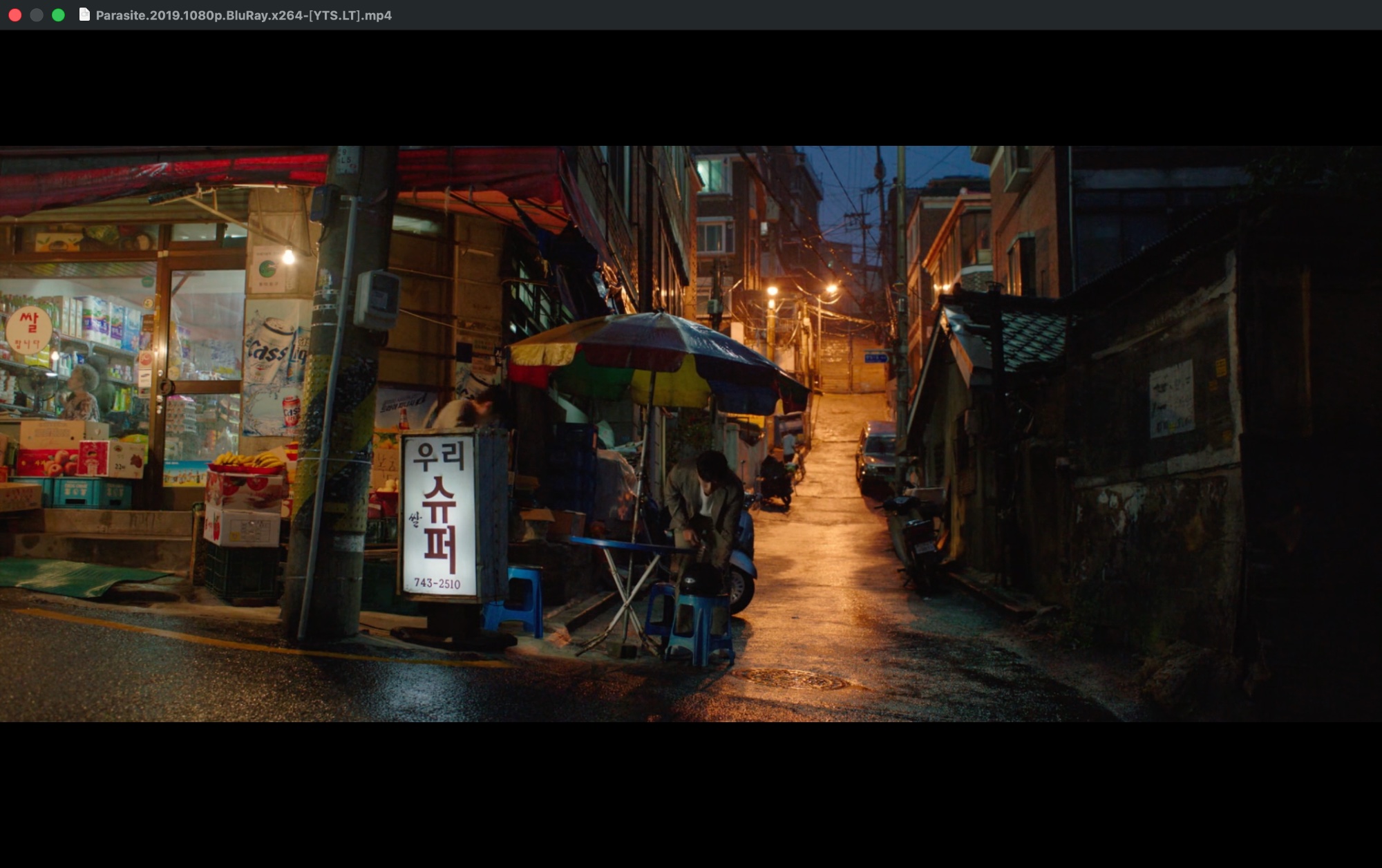
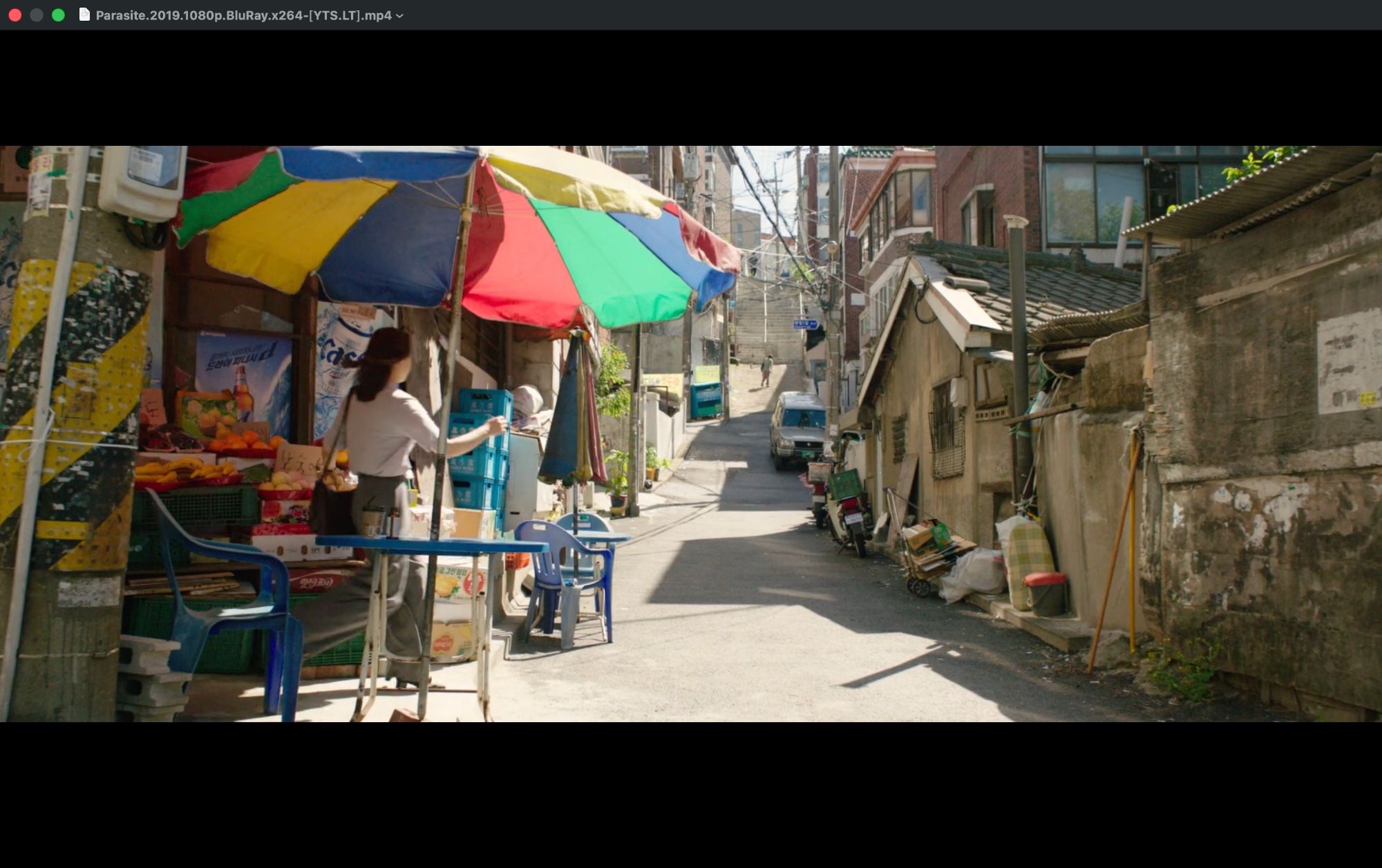
Techniques: To break down the composition, there are too many color in a frame, suggesting a sense of chaos; the buildings are quite decayed, the walls are low; the neighbourhood is not carefully arranged. More like a community.
Effects: Those together suggest this neighborhood is probably low notch, and the audience can have a general idea of what the people like the Kims who lives in this street might be.
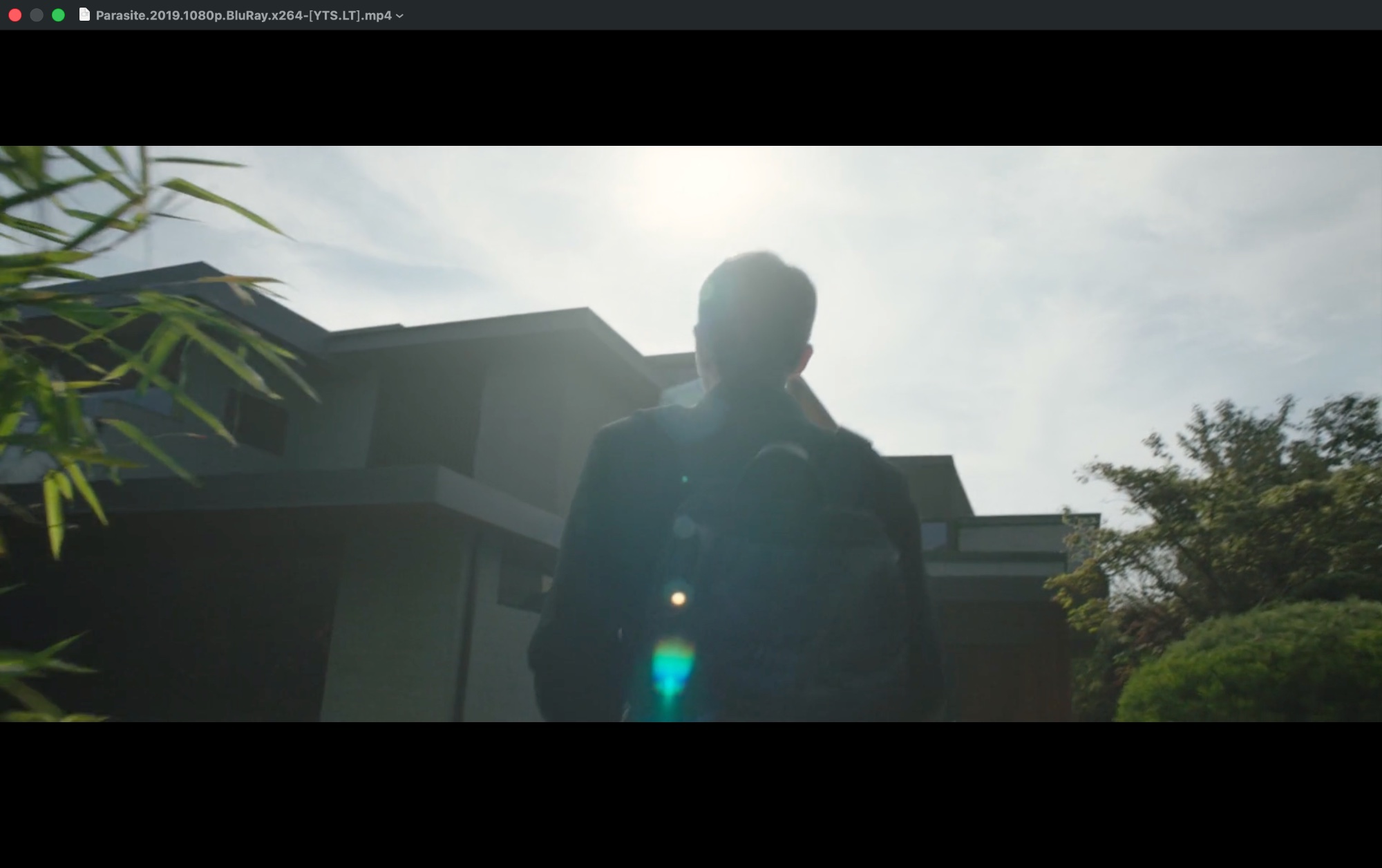
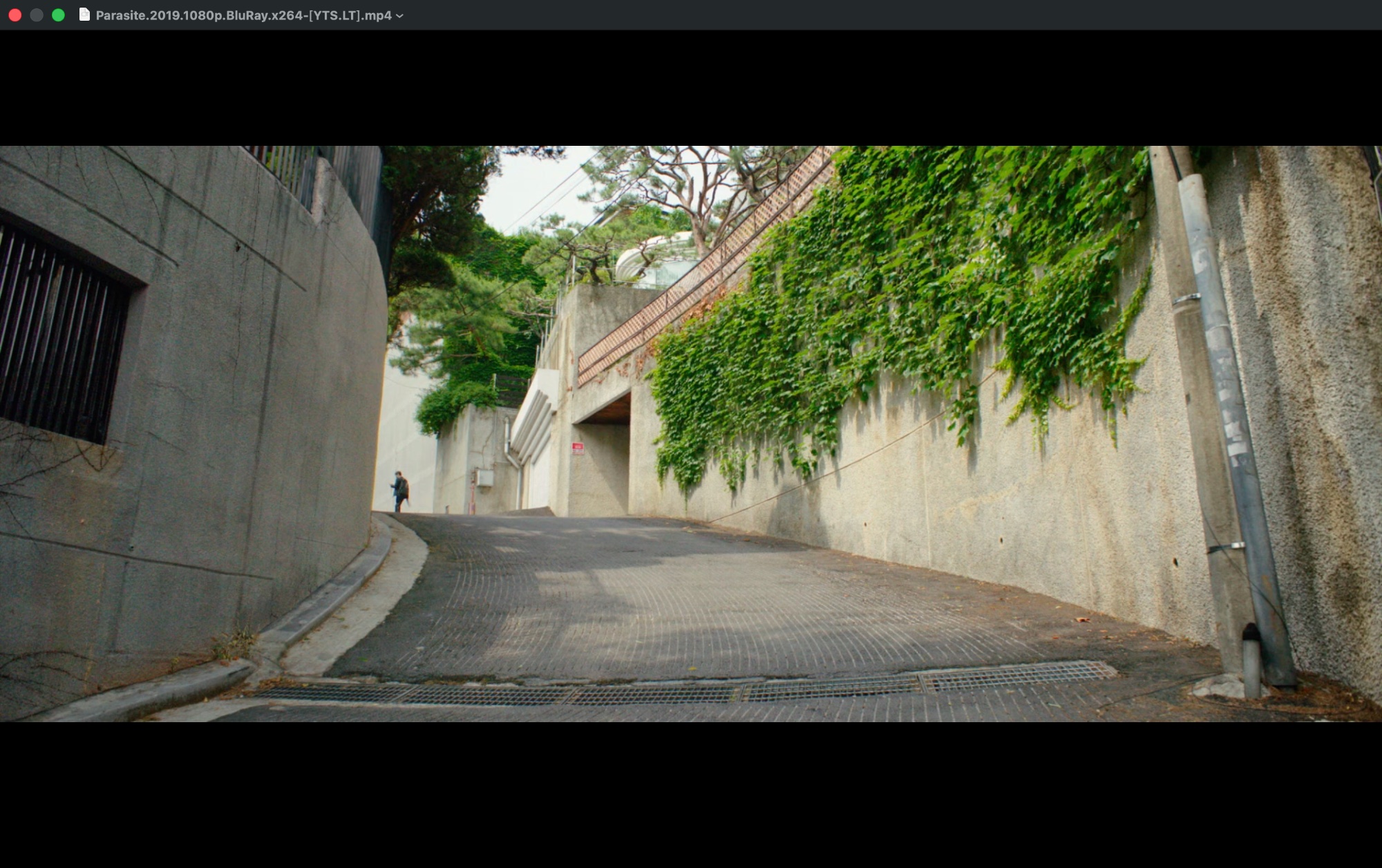
Techniques: This scene contains a lot of low-angle shot, the composition is wide, and the colors are clean.
Effects: By distorting the building a bit, a low-angle shot, wide composition, and clean colors makes the house and neighborhood seem big, implying to the audience that the owner of this house must be rich or have a high social status.
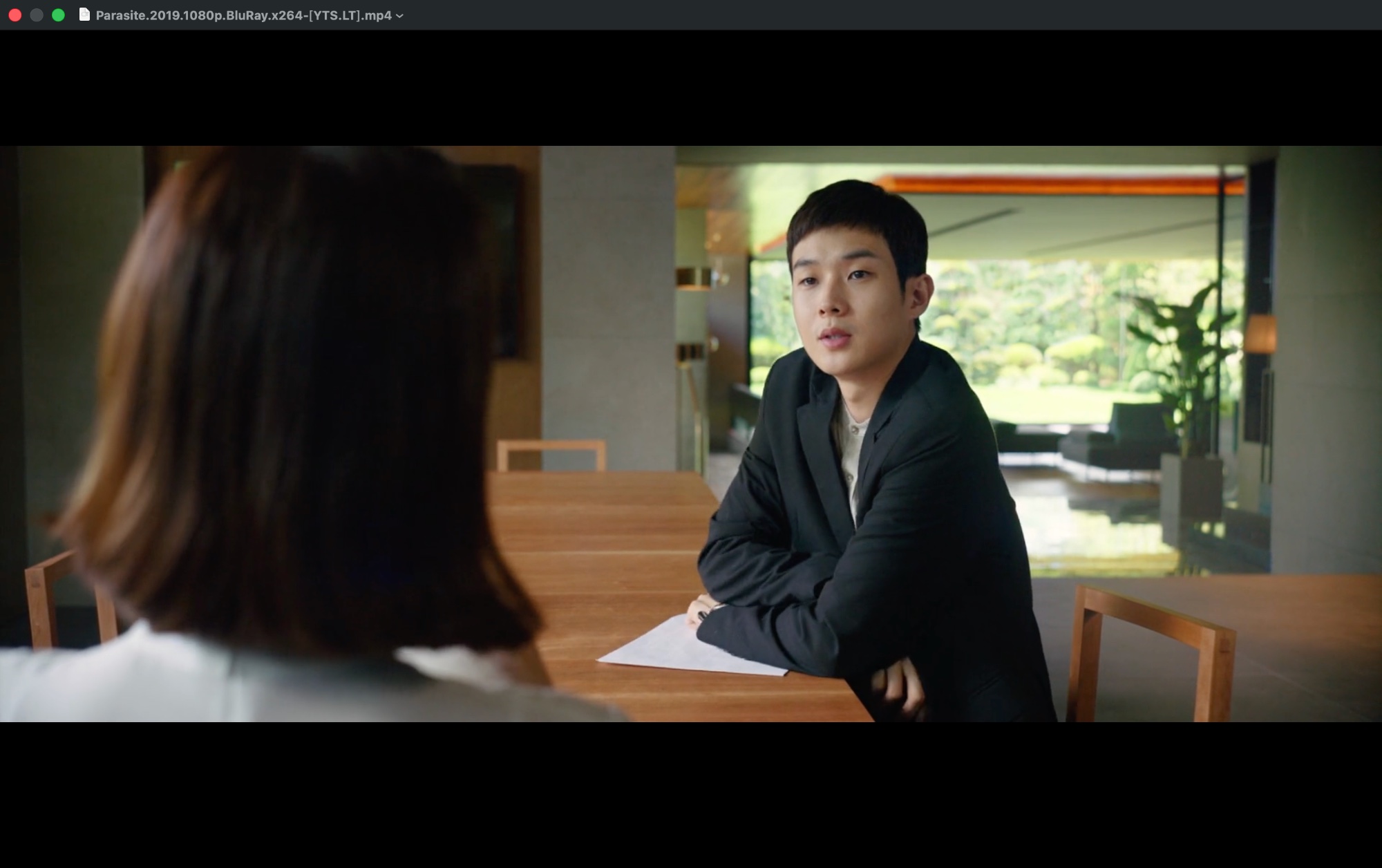
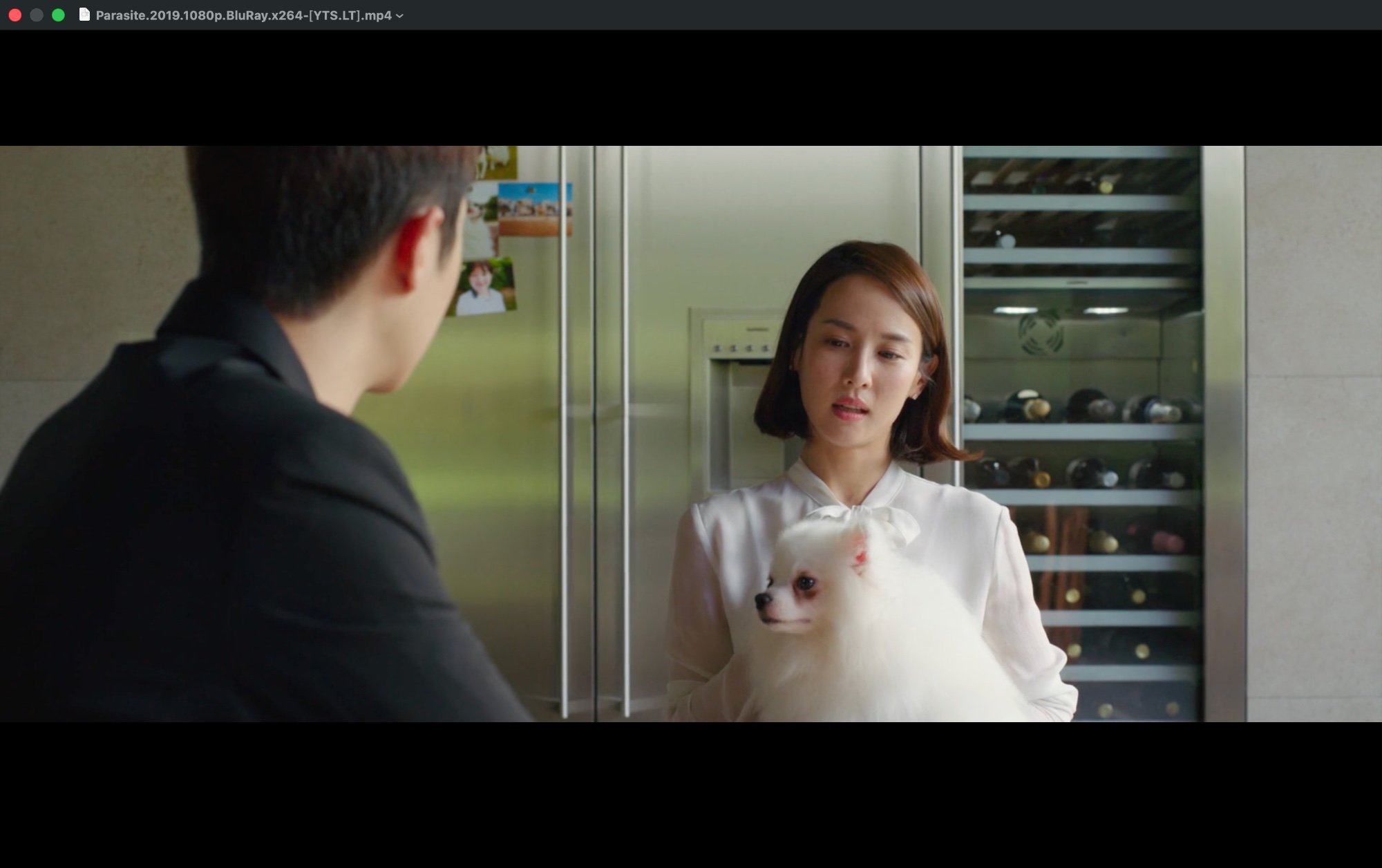
Techniques: The over the shoulder shot shows the conversation between characters. The compositions of two frames are both of the one who’s speaking take two-third of the frame. However, Yeon-gyo’s head already fills the other one-third of the frame, while almost half of Gi-taek’s upper body kind of crowed in the left frame.
Effects: Compared to Yeon whose body language is more relaxed and stretched, Gi-taek is more cramped and awkward, creating an unbalance of their power.
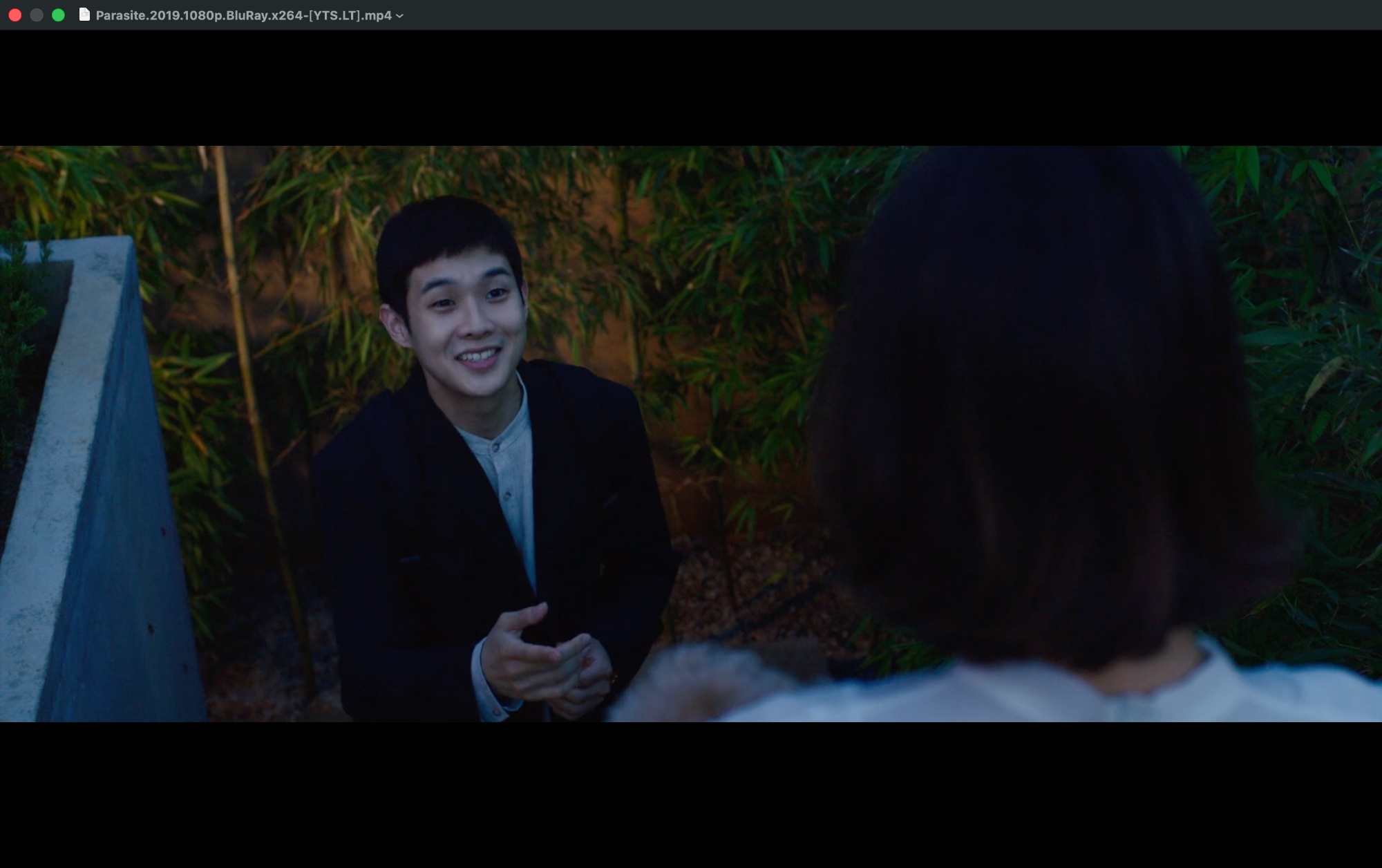
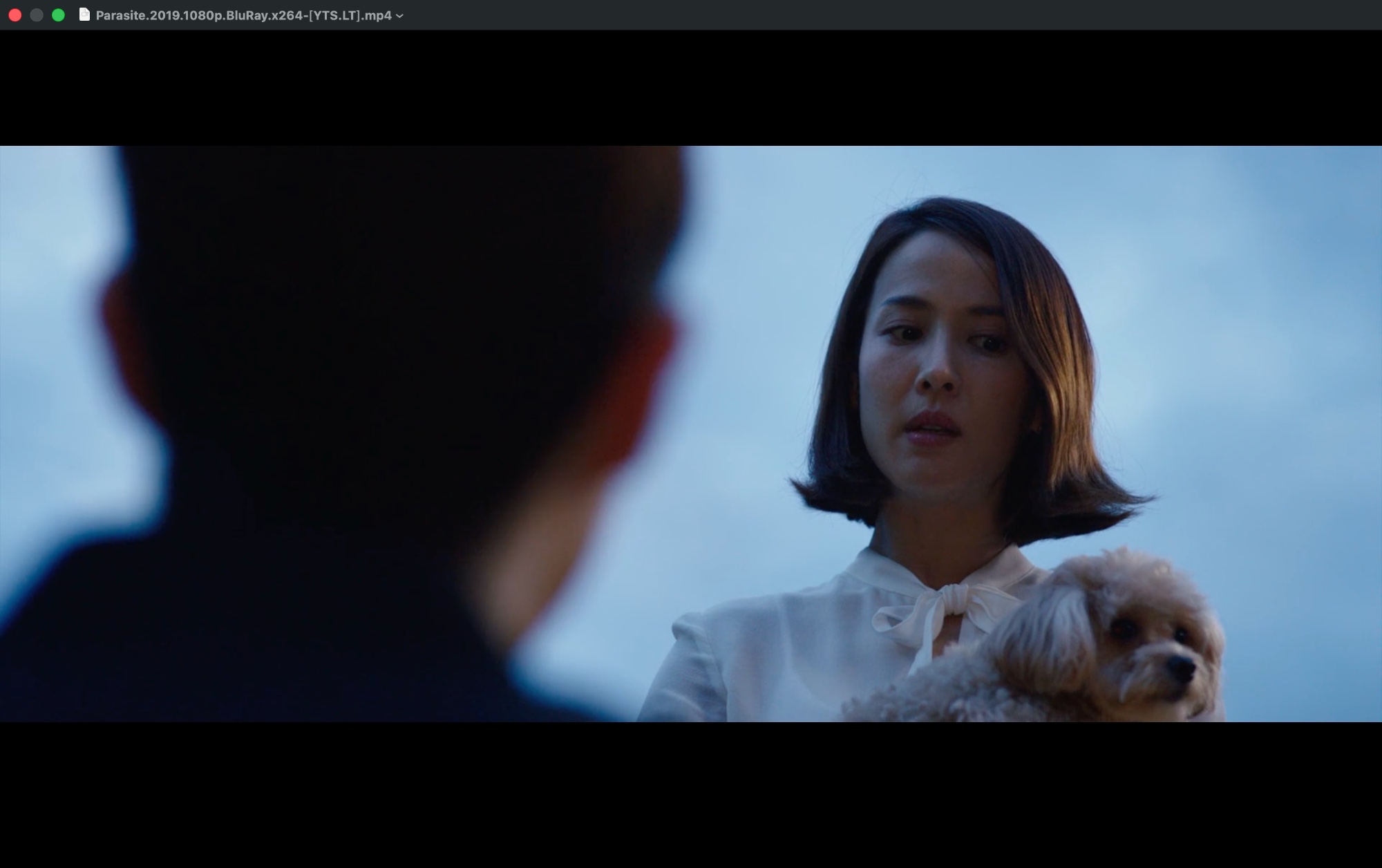
Techniques: The director applies a high angle shot to shoot Gi-taek, whereas a low angle shot to shoot Yeon.
Effects: This application of diverse angle reveals an unbalance in power between different class of people via positioning Yeon in a relative upper place and Gi-taek in a relative lower place, corresponding their social status.
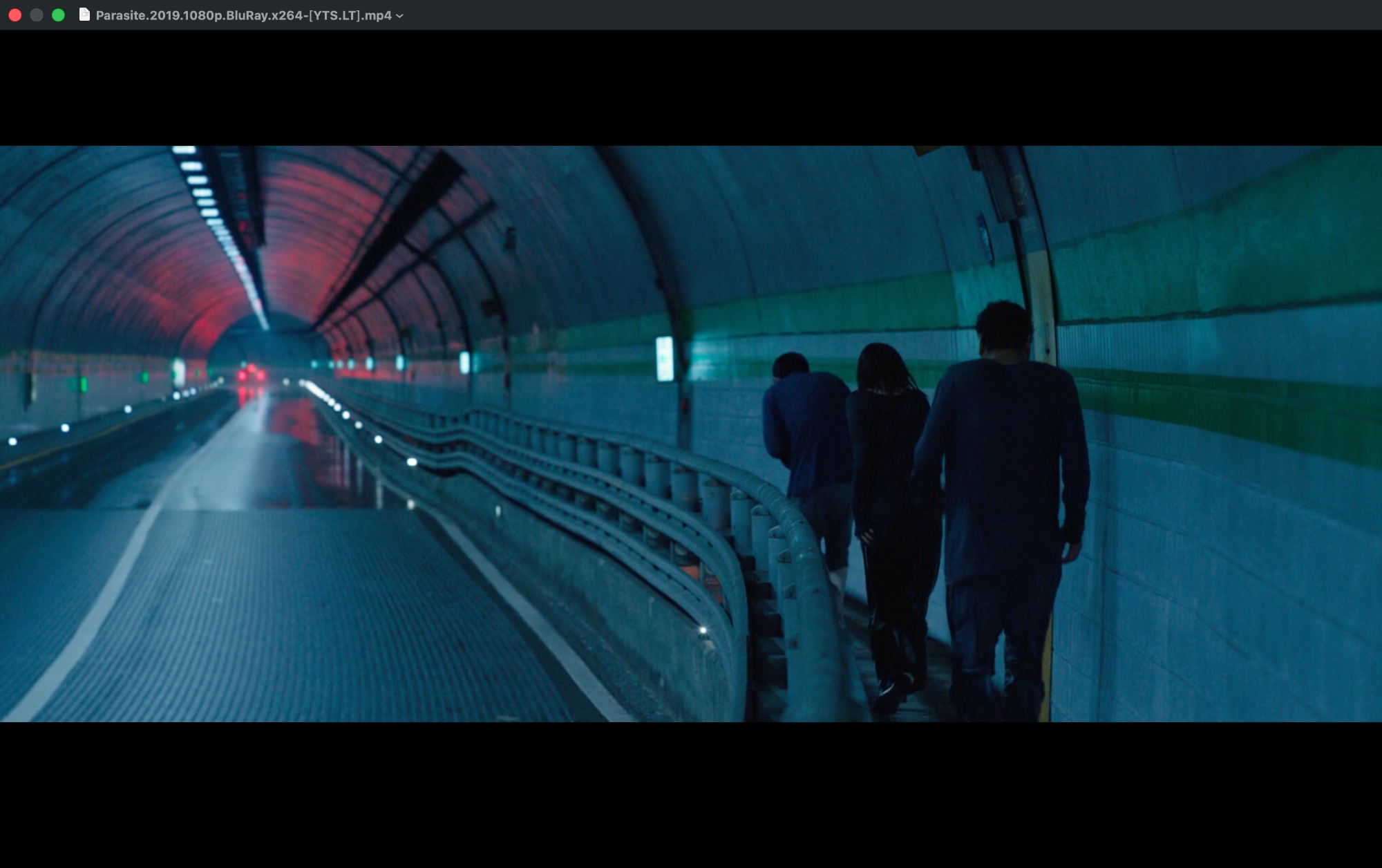
Techniques: The wide shot captures the Kims as a whole, framing them together with the deep, vast tunnel they are walking through. The composition is that, on the left side of the frame, there is red lighting, while on the right side, there is cold green lighting. The lines of the tunnel, the tracks on the ground, and the railing on the right all converge toward a point deep in the background of the frame.
Effects: The characters are walking into the unknown, implying that their future and what they are about to face is unknown. The family appears extremely small, exhausted, and insignificant in the face of the massive tunnel.
The camera builds the difference between the two families through composition and angle. In the Kims' crowded frame, the family barely fits, with little breathing space, while the Parks' frame is freer and more relaxed; this makes the audience feel the Kims are cramped, yet also physically and emotionally close, whereas the Parks are comfortable but isolated. The low, messy streets where the Kims live, full of decaying walls and clashing colors, suggest a low-status community, while the wide, low-angle shots of the Parks' neighbourhood make their house seem huge and clean, implying wealth and high social status. In the conversation between Gi-taek and Yeon-gyo, the over-the-shoulder shot gives Yeon-gyo more space while Gi-taek is cramped, and the high angle on Gi-taek versus the low angle on Yeon-gyo places her above him, revealing an imbalance of power. Finally, the wide shot of the Kims in the tunnel makes them small and insignificant, walking into an unknown future. Together, these frames show the camera positioning the Kims as lower, crowded, and powerless, yet tightly bonded, and the Parks as higher, spacious, and powerful, but distant. I learned to use the color to create the atmosphere of my opening.