Parasite,the Frame Analysis
00:14:47
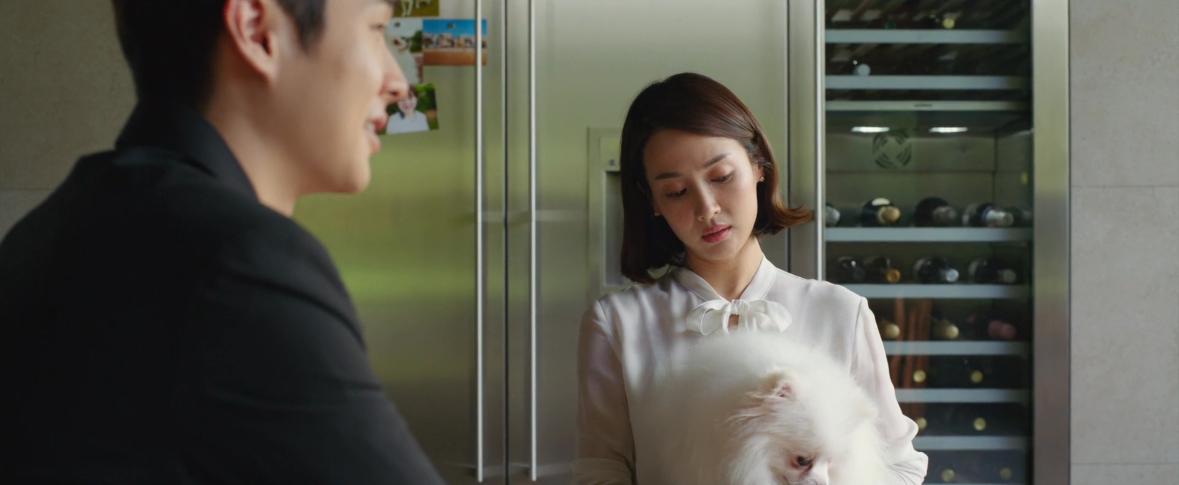
This over-the-shoulder medium shot uses shallow focus; we see Mrs Park from Ki-woo’s shoulder, with the wine cabinet in the background.
The foreground figure partially blocks the frame, letting viewers feel Ki-woo’s viewpoint and his awkwardness inside the rich family’s home.
00:28:05
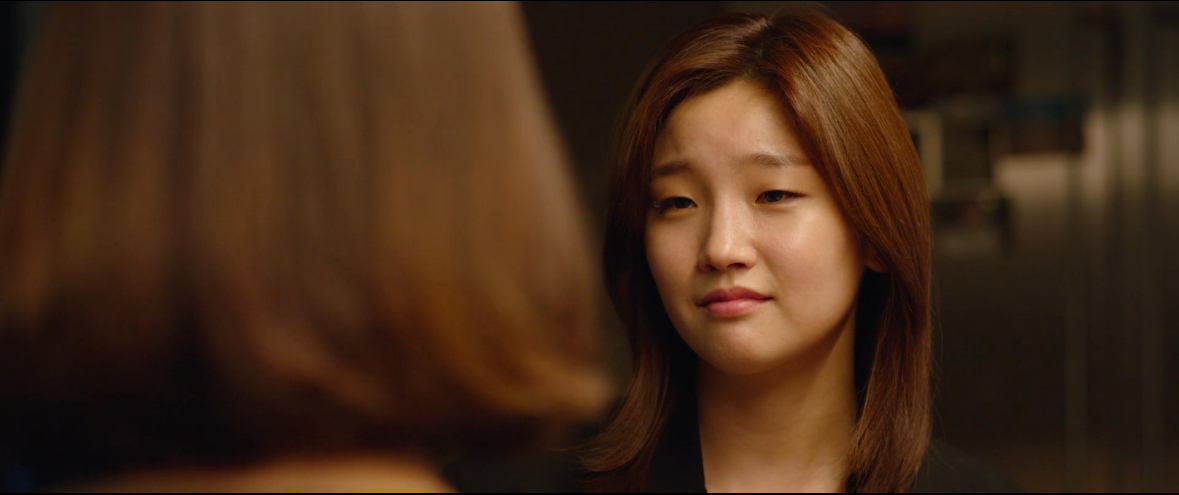
This point-of-view medium shot on Ki-jung is from Mrs Park’s perspective, focusing on Ki-jung’s facial expression.
The shot invites the audience to judge Ki-jung’s performance, noticing her carefully controlled, fake professional manner.
It reveals how the Kims perform identity to cross the class line temporarily.
01:02:18
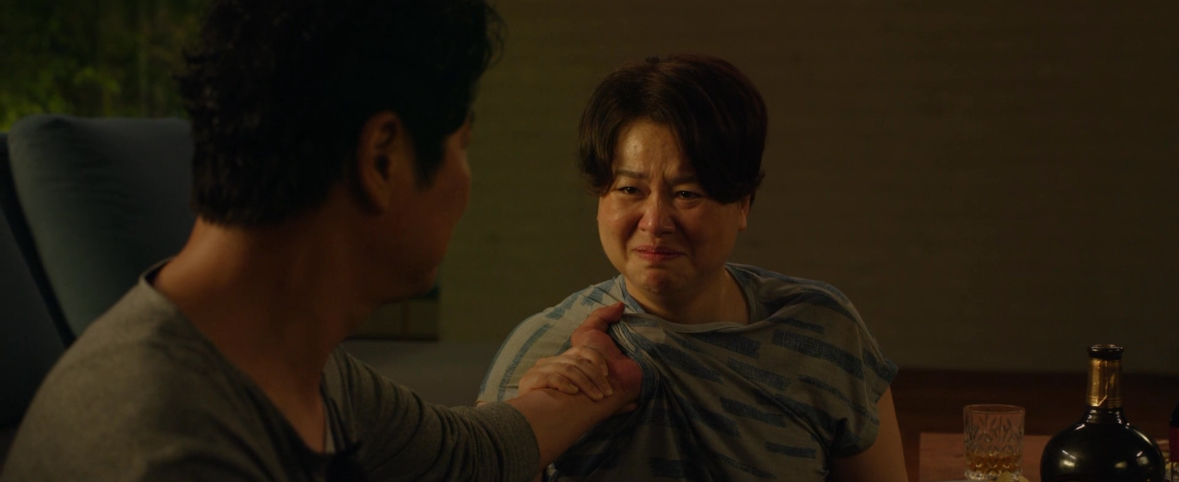
This over-the-shoulder medium close-up from Parasite shows Kim’s wife crying in the rich family’s empty villa. Soft warm lighting creates a cozy mood.
The space contrasts sharply with their cramped semi-basement home. They temporarily enjoy luxury that is not theirs. It reveals the film’s theme of class difference.
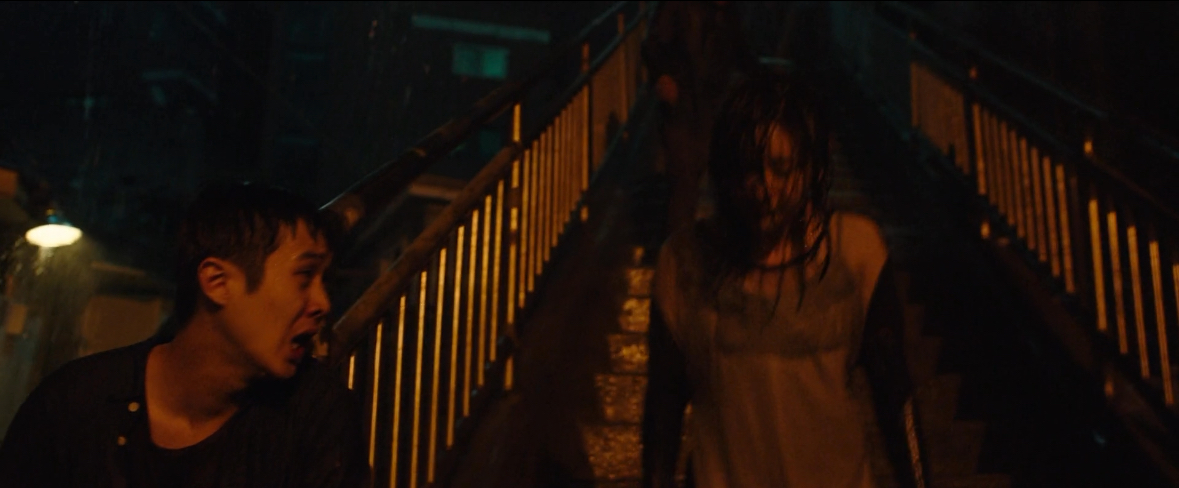
01:33:04
This is a handheld shaky long medium shot with tight claustrophobic composition, following the Kims fleeing the Parks’ house in rain.
Unstable camera movement creates viewer anxiety and chaos, contrasting the calm stability of prior Park household shots.
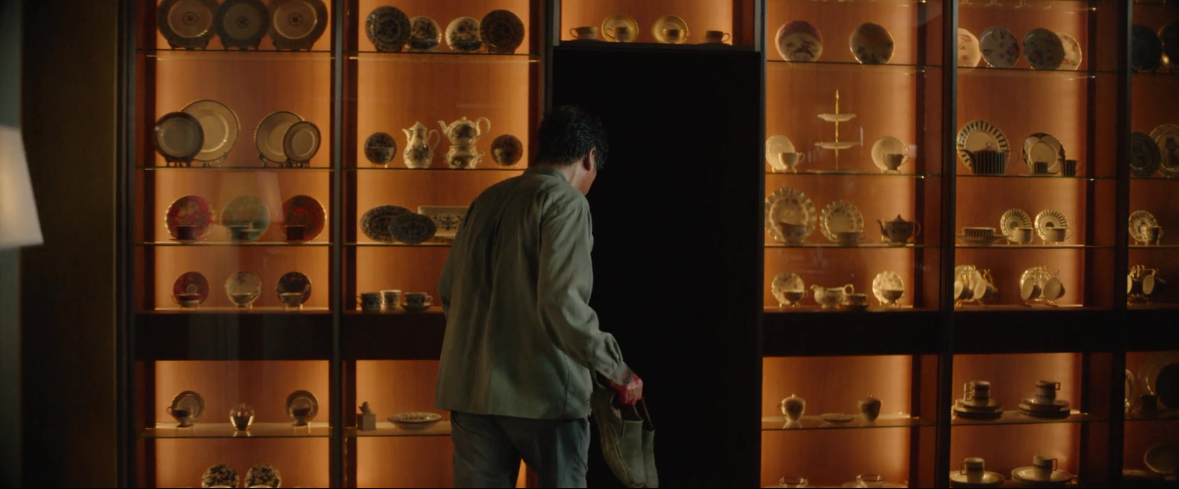
012:01:30
This medium shot from Parasite shows Ki-taek standing before the hidden door behind the china cabinet. Warm lit display shelves surround the deep dark secret passage.
The bright, luxurious display and pitch-black doorway create strong visual contrast. It reveals that beneath the wealthy family’s beautiful home lies hidden suffering, reinforcing the film’s theme of class separation.
Bong Joon-ho uses framing, lighting and camera angle to visually construct the sharp class difference between the poor Kim family and wealthy Park family in Parasite.
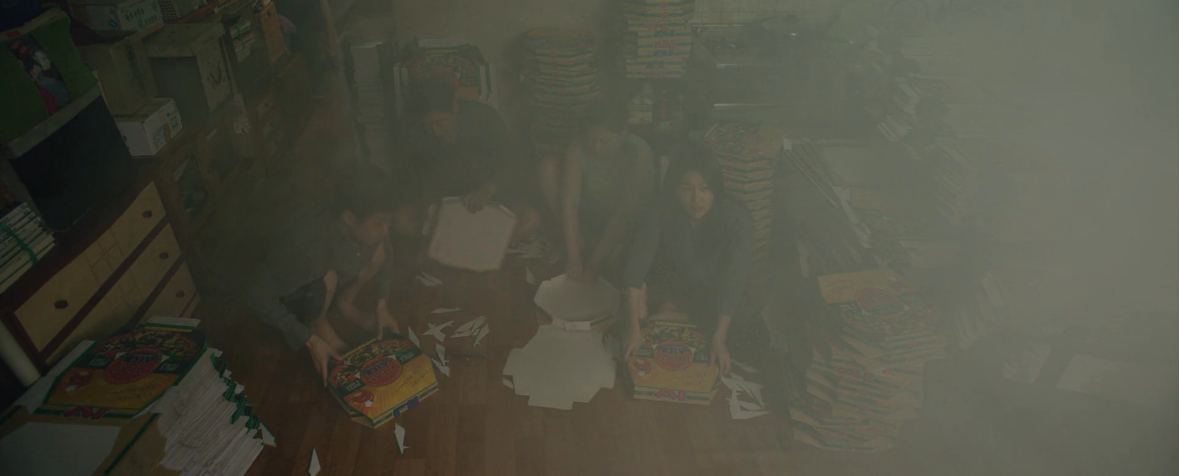
First, the high-angle establishing shot shows the Kims crowded in a smoky, messy semi-basement, shrinking them within cramped clutter to show their restricted living space. Then the over-the-shoulder medium close-up captures Kim’s wife crying inside the spacious villa, with soft warm lighting showing the comfort the Kims can only temporarily borrow. A medium shot frames Ki-taek before the hidden door behind the glowing china cabinet; the bright luxury shelves and pitch-black secret passage reveal hidden pain under wealth. Other shots, including point-of-view, low-angle and close-up shots, further reinforce this divide. Rich spaces are open, tidy and warmly lit, while the Kims’ real home is confined and grim. The camera shows that wealth creates separate worlds, and the Kims can never truly belong in the Park family’s space.
Frame 6’s divisive bird’s-eye composition teaches that the film’s camera work does not just show individual class difference, but visualises unbreakable systemic social inequality between elite and working-class communities.