Frame 1:The Ascending Staircase
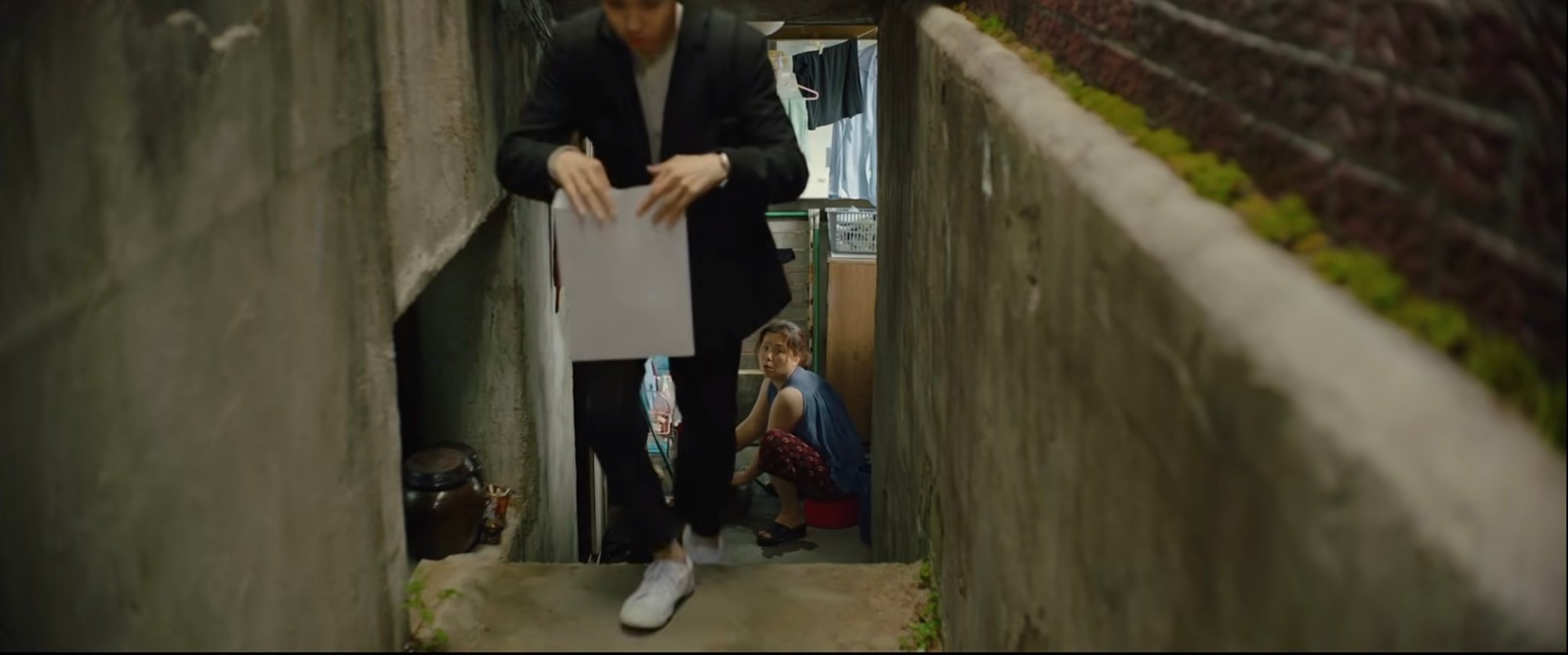
Technical aspects: Low-angle shot, tilt-up camera movement, depth of field.
Analysis: This frame shows Ki-woo leaving his semi-basement home to go for his tutoring interview. The camera tilts up as he walks up the stairs, which emphasizes his physical movement. The low angle makes him look tall and hopeful, suggesting a temporary rise in his social status. Meanwhile, his parents are left at the bottom of the stairs and out of focus. This use of depth of space represents the class hierarchy. While Ki-woo tries to climbs towards the wealthy world above, his parents remain trapped and invisible in the lower class.
Frame 2: The Ascent Of Suspenseful
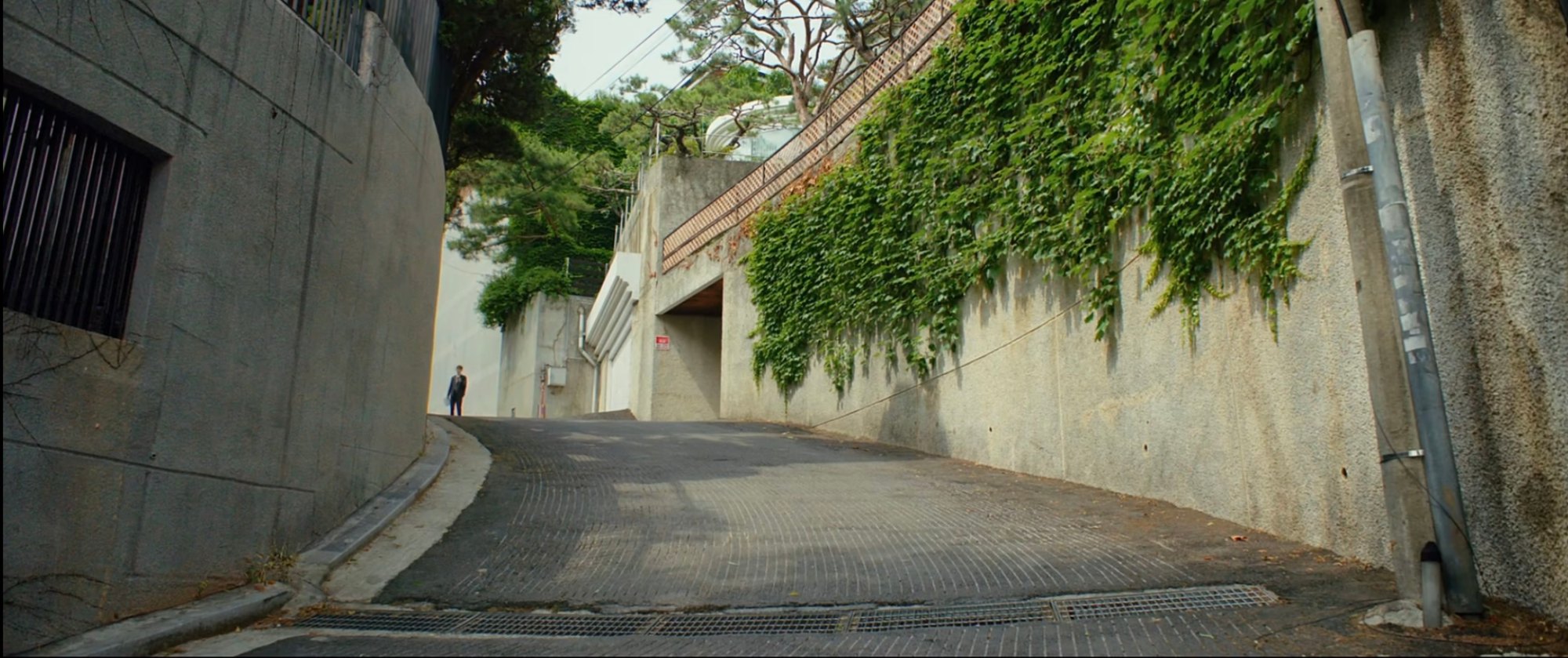
Technical aspects: Transition in lighting, sound design (suspense sound effect and natural sounds).
Analysis: As Ki-woo travels from the poor area to the rich neighborhood, there is a clear transition in lighting and atmosphere. The scene moves from dark to bright, sunny streets. What makes this frame effective is the sound design. The "deng deng deng deng" suspense sound effect is like something from a thriller or horror film, creating a sense of foreshadowing and tension. This is layered with the rustling sound of leaves, which adds a mysterious vibe. The audio hints to the audience that this journey into the rich world is not just a happy promotion, but the beginning of dangerous.
Frame 3: The Living room Feast
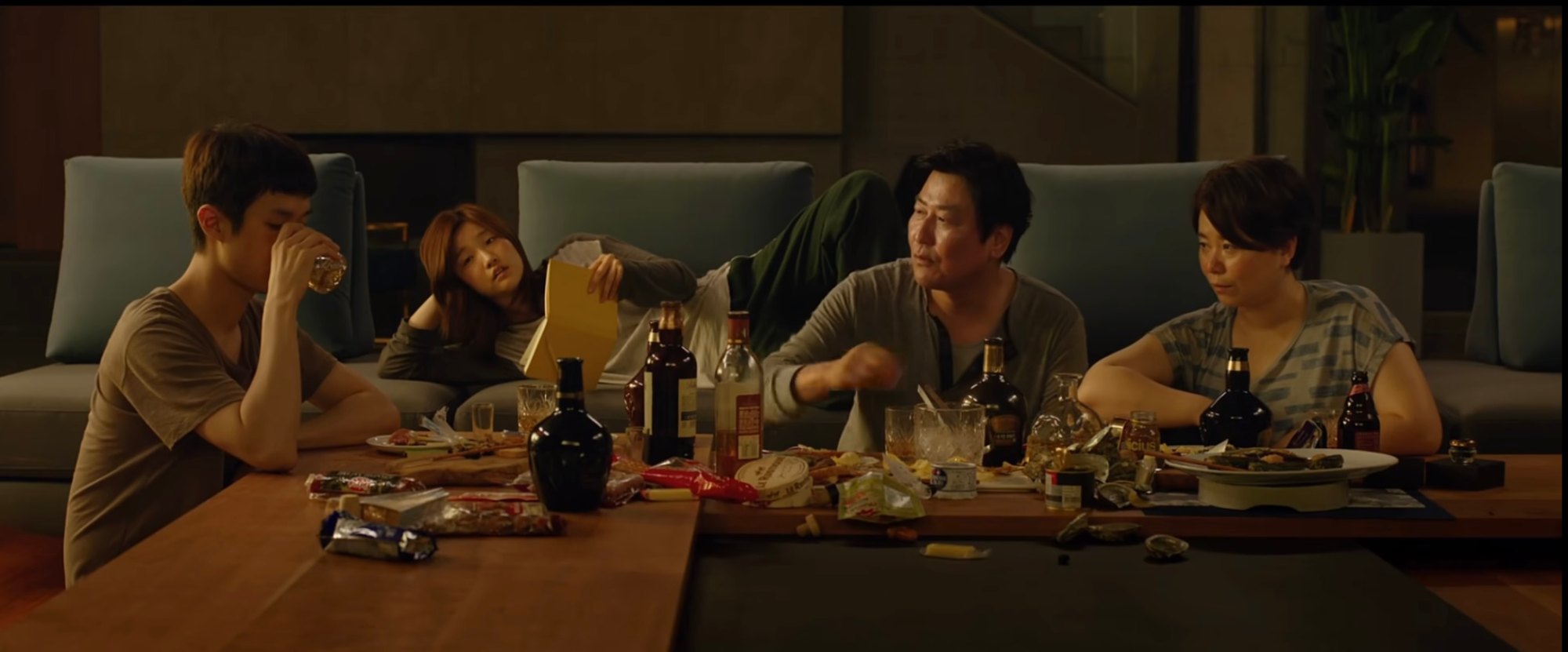
Technical aspects: Wide shot, warm lighting.
Analysis: This frame captures the Kim family drinking and eating in the Park's living room. Unlike the cramped and narrow environment of their own home, here they are spread out and relaxed. The wide shot and warm lighting capture their temporary comfort and joy. They are joking and talking freely, which serves as a brief relaxation in the tense plot. However, there is strong irony. The physical space allows them to act like the owners of the house, but this scene deeply highlights their "parasitic" behavior. The comfort is temporary and based on lies, making the audience feel both relaxed and anxious.
Frame 4: The Endless Tunnel
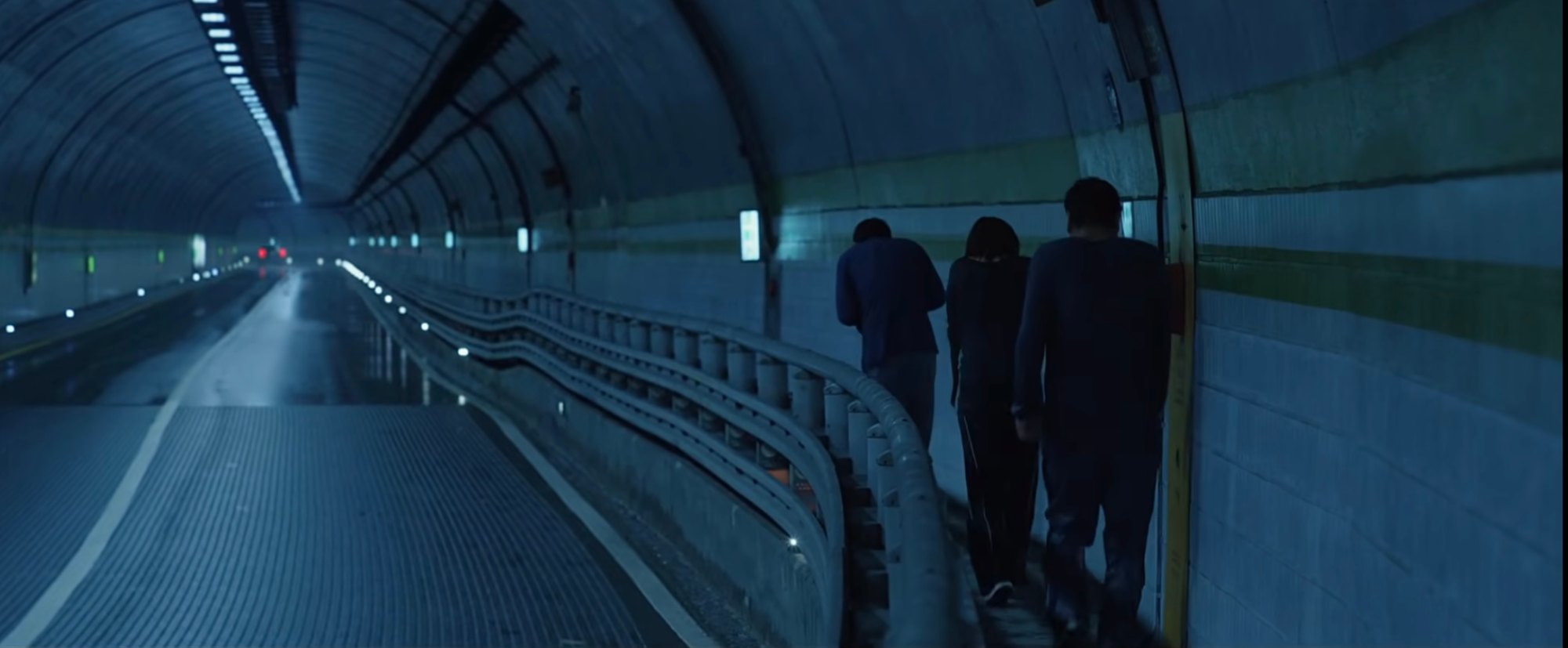
Technical aspects: Linear, tracking shot, cool blue color palette, wide shot.
Analysis: This frame shows the Kim family escaping from the rich house on a rainy night. The most striking is the linear perspective of the tunnel, which creates a huge depth of field. The vanishing point makes the road look extremely long and far away, symbolizing an endless and exhausting struggle. The family is placed in the bottom right corner, huddled in clothes and running. Compared to the wide, bright spaces of the rich house, they look tiny and powerless here. The dark, cold tones indicate a kind of harsh return to the reality.
Frame 5: Descent into Reality
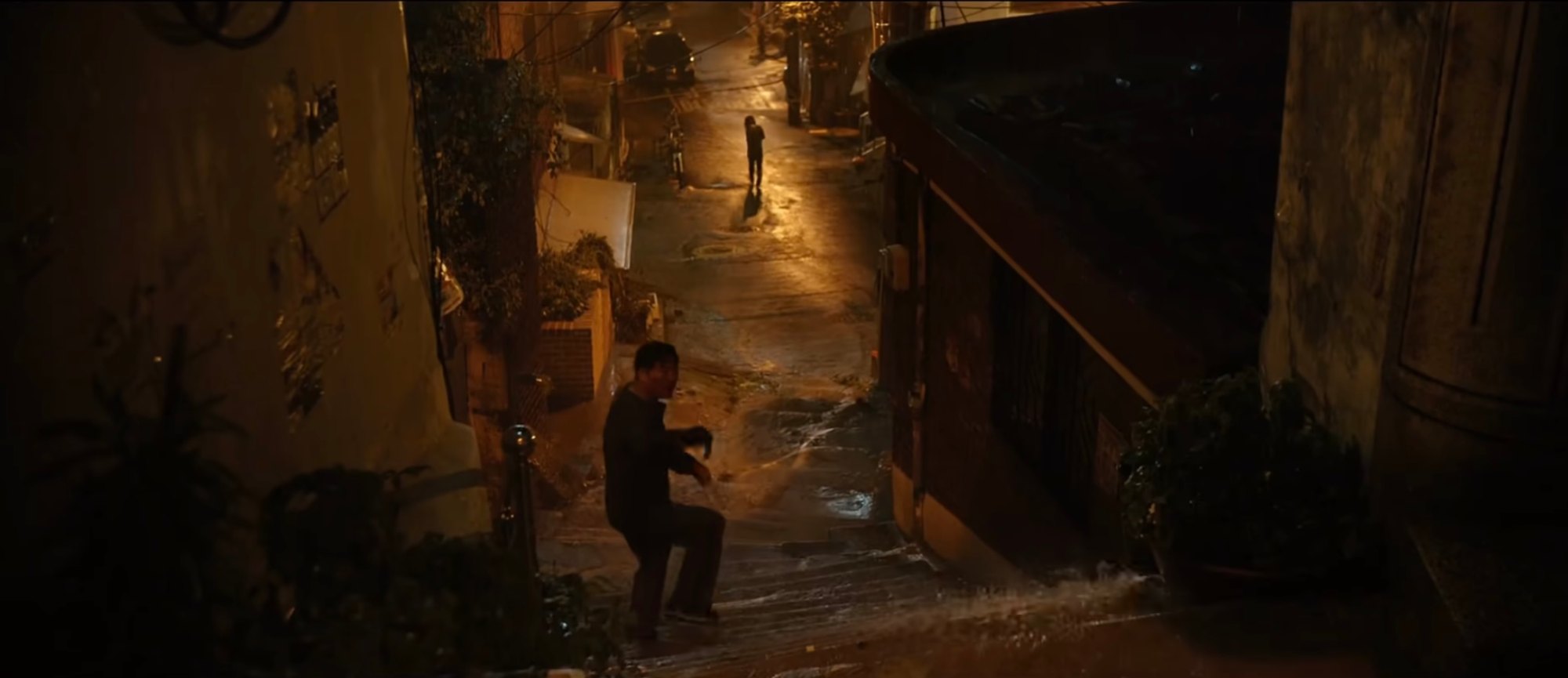
Technical aspects: High angle, lighting transition (white to yellow), sound (rain sounds).
Analysis: As they approach their home, the physical movement is all downwards. The high angle and the endless downward stairs strongly symbolize their descent back to the bottom of the social hierarchy. This frame also has a very effective use of sound. The sound of the rain changes from sharp to muffled and fluctuates in volume, indicating the change of the environment as they move deeper into the poor neighborhood. The lighting also shifts from cold white to a dirty yellow, representing the transition from the clean, wealthy area to the miry, poorer part of town.
Frame 6: The Flooded Basement
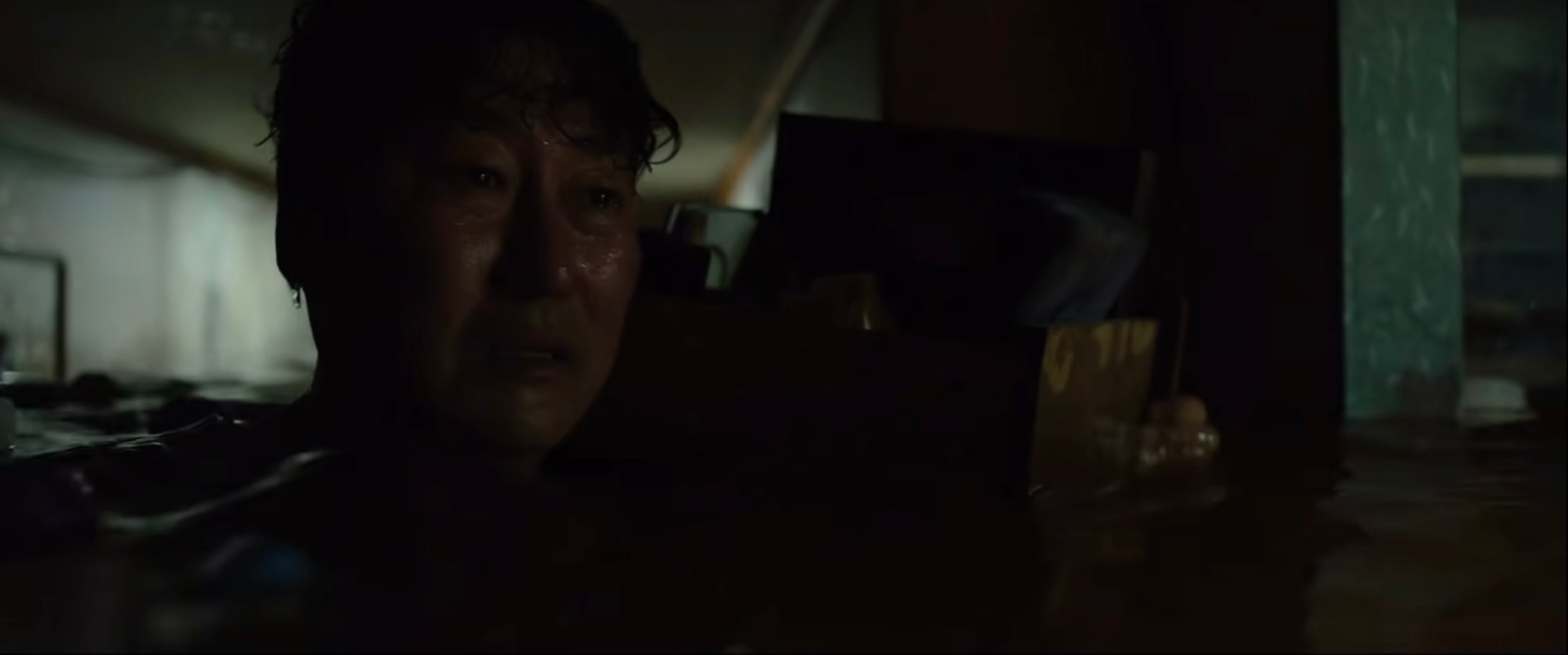
Technical aspects: Close-up, dim lighting.
Analysis: When they arrive home, everything is flooded. The camera gives a close-up of the father's face as he picks up important items with tears in his eyes. The dim lighting emphasizes the tragedy. To me, the most impressive is the transition at the end of the scene, the water rises higher and higher until it submerges the entire room, and then it cuts to the next frame. This transition is a powerful visual metaphor for the poor class being completely "drowned" and overwhelmed by their environment. The father's tears show not just sadness, but loss of dignity, as the rainwater destroyed their home,
What the camera does to the two families
The director uses the camera to powerfully highlight the class divide between the two families through visual contrasts, vertical space, and the symbolism. Firstly, the camera compares the crowded, dark semi-basement of the Kims with the spacious, luxuriant of the Parks. Tightened framing and dim lighting are used to capture the Kims' daily struggles and their crowded environment, while wide shots and bright, natural lighting in the rich house emphasize the Park’s luxury and even they don't even need to do their own cleaning or laundry. Secondly, the camera uses vertical space to represent the social hierarchy. From the stairs the family climb to the underground tunnel they run through, the constant upward and downward movement symbolizes their attempt to rise in society and their hopeless descent back to the bottom. Finally, the heavy rain is the most powerful tool to show this inequality. For the wealthy Parks, the rain only ruins a camping trip, and just the next day they decided to do a garden party. However, for the Kims, the camera captures a disastrous flood that destroys their home and takes away their shelter. This extreme contrast not only shows their different realities but also acts as the final trigger for the characters' violent breakdown. Ultimately, the camera turns physical spaces into a sharp contrast of social inequality.
What I Learned
Frame 2 teaches me that even a warm scene with strange suspenseful music can make the audience feel uneasy, which is a great way to foreshadow a tragedy in my own opening.